 Set-Up Space
Design . Produce . Install
 Skip to the content Set-Up Space
Location : Vogar, Iceland
Date of completion : Jan – 2022
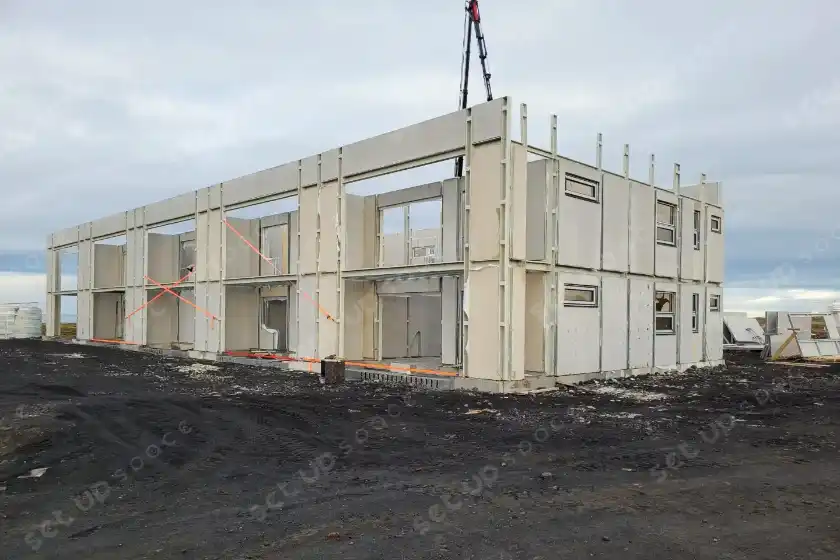
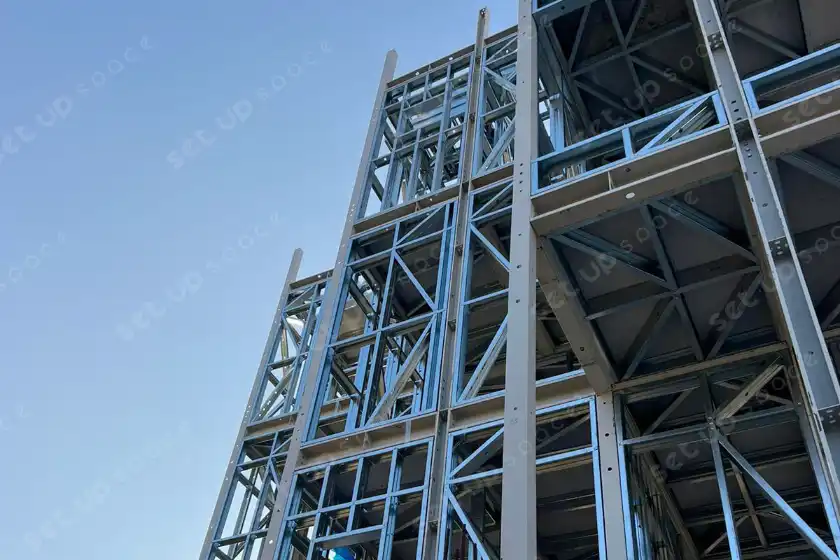
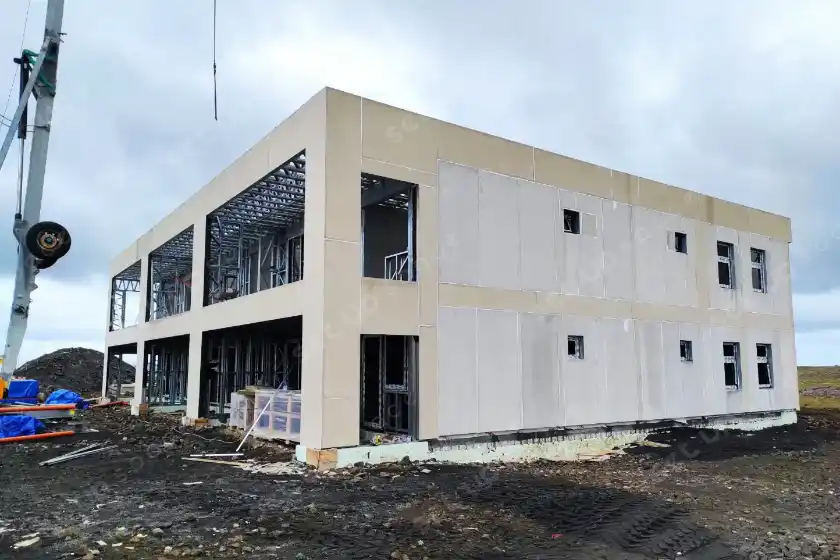
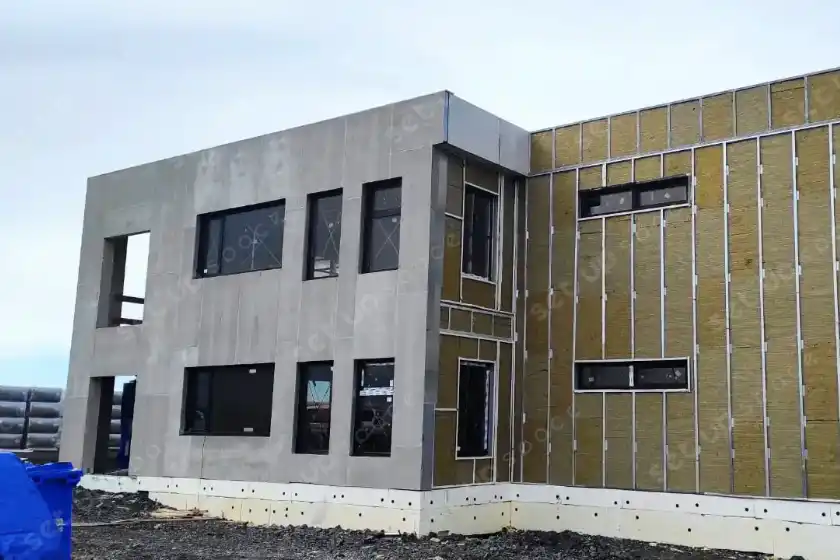
Building System : Cold-formed steel structure + Prefabricated wall panels
Building Area: 1,450 m²
Client : Midfielder LTD – Brix Houses EHF.
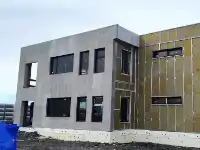
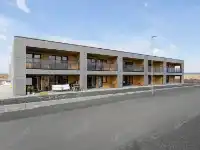
With a total built-up area of 1,450 m² and a strategic location near Keflavík, Iceland, the Grænaborg 2 Residential Complex in Vogar was developed to address one of Europe’s most pressing housing challenges: delivering affordable homes with rapid construction timelines, without compromising on quality, safety, or sustainability.
Beyond economic and scheduling constraints, the project faced significant site-specific environmental challenges. Located in one of the world’s most seismically active regions, the development is also exposed to extreme weather conditions, with wind speeds reaching up to 120 km/h during certain periods of the year.
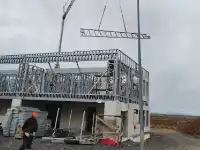
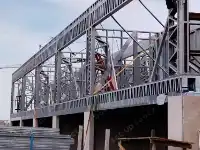
In response, the project adopts a Cold-Formed Steel structural system, demonstrating how innovative steel construction technologies can redefine residential development in seismic and harsh-climate environments. This approach enables high structural performance and resilience while maintaining cost efficiency, construction precision, and strict adherence to demanding project timelines.
Iceland is located directly on the Mid-Atlantic Ridge, one of the most seismically active fault zones on Earth, where the North American and Eurasian tectonic plates converge. As a result, seismic resistance is not merely a desirable feature, but an essential requirement for any construction project in the country.
For the community of Vogar, the demand for high-quality residential spaces capable of withstanding seismic activity—while being delivered rapidly and within a constrained budget—posed a complex architectural and engineering challenge.
From the early stages of development, it became clear that conventional construction methods would be too slow, costly, and structurally inefficient in seismic conditions. A solution was needed that could combine affordable housing, fast-track construction, and exceptional structural performance under seismic loads.
The answer lay in adopting advanced Cold-Formed Steel structural systems paired with engineered prefabricated wall assemblies. These systems were specifically designed to achieve an optimal balance between:
This integrated approach enabled the project to achieve high levels of structural resilience, sustainability, and indoor comfort, while completing construction within an exceptional timeframe of just 95 days.
The selection of Cold-Formed Steel (CFS) as the primary structural system was not arbitrary; it was a direct response to Iceland’s highly demanding seismic environment. This system offers a set of unique structural characteristics that make it particularly well-suited for construction along active fault lines.
For the Grænaborg 2 Residential Complex, these combined advantages made cold-formed steel the ideal structural solution. The project required affordable housing, accelerated construction timelines, and uncompromised life-safety standards—all within one of the world’s most seismically unpredictable environments.
What truly distinguishes the Grænaborg 2 Residential Project is its exceptional delivery timeline, achieved through an optimized prefabricated construction approach. By executing key phases in parallel rather than sequentially, the project reached full completion in just 95 days.
Overall Timeline: 95 Days
From initial concept to full completion, the project represents a compelling demonstration of the true potential of affordable housing when advanced engineering, industrialized construction, and parallel execution strategies are brought together.
+963 994 426 143
info@setupspace.co
Address:
Damascus, Syria
Commercial Agents:
Libya: Bonyaan Prefabricated Buildings, Tripoli
+218 91 – 00 85 777