 Set-Up Space
Design . Produce . Install
 Skip to the content Set-Up Space
Location : Vogar, Iceland
Date of completion : Jul – 2022
Building System : Cold-formed steel structure + Prefabricated wall panels
Building Area: 1,200 m²
Client : Midfielder LTD – Brix Houses EHF.
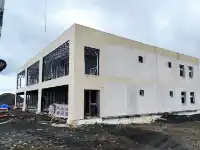
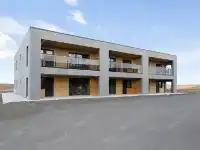
Building on the proven success of Grænaborg 2, and as a continuation of the broader urban planning strategy for affordable and sustainable youth housing in Vogar, the Grænaborg 6 project represents the next phase in this forward-looking residential development.
Developed on a total area of 1,200 m² and strategically located near Keflavík, Iceland, the project continues to address one of Europe’s most pressing urban challenges: delivering high-quality housing at affordable costs, with accelerated construction timelines, while fully maintaining safety standards and environmental sustainability.
Grænaborg 6 reflects a strong commitment to contemporary residential models tailored to younger communities, responding to the region’s climatic and seismic conditions through advanced construction solutions that balance economic efficiency, functional flexibility, and long-term residential quality.
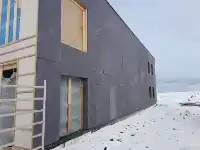
Beyond economic and scheduling constraints, the project faced significant site-specific environmental challenges. Located in one of the world’s most seismically active regions, the development is also exposed to extreme weather conditions, with wind speeds reaching up to 120 km/h during certain periods of the year.
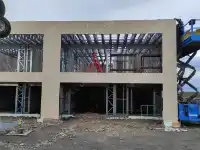
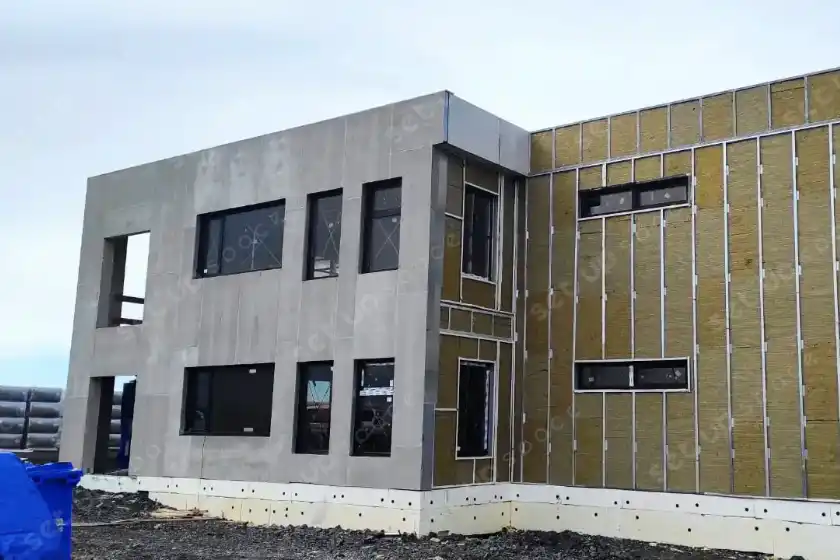
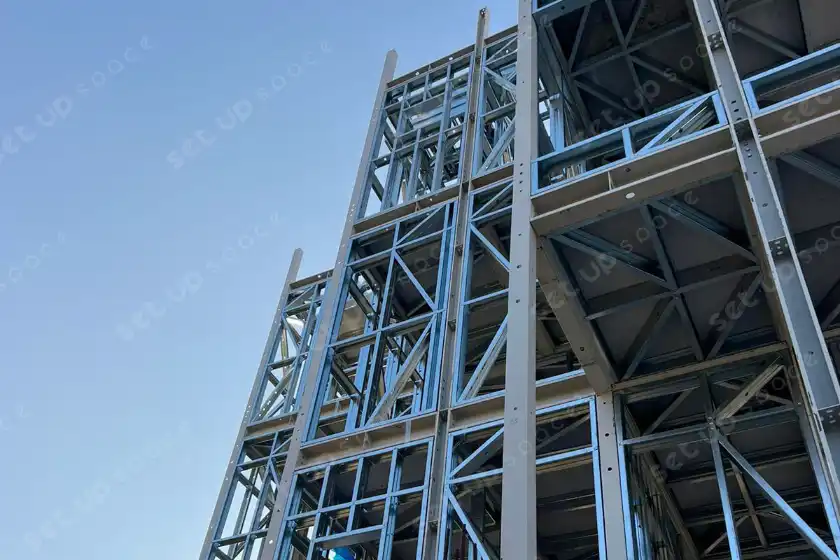
In response, the project adopts a Cold-Formed Steel structural system, demonstrating how innovative steel construction technologies can redefine residential development in seismic and harsh-climate environments. This approach enables high structural performance and resilience while maintaining cost efficiency, construction precision, and strict adherence to demanding project timelines.
Iceland is located directly on the Mid-Atlantic Ridge, one of the most seismically active fault zones on Earth, where the North American and Eurasian tectonic plates converge. As a result of this geological reality, seismic resistance in construction projects is not an optional feature, but a fundamental and non-negotiable requirement.
For the community of Vogar, the challenge lay in delivering high-quality residential units capable of withstanding seismic activity, while completing them within a short timeframe and under strict economic constraints—posing a complex architectural and engineering dilemma.
The development team recognized the effectiveness and efficiency of the construction system successfully implemented in the first project, Grænaborg 2. The use of cold-formed steel and prefabricated wall systems had proven to be a structural solution that combines affordable housing, rapid execution, and high structural performance under seismic conditions.
Accordingly, the same cold-formed steel (CFS) structural systems were adopted, together with advanced prefabricated wall assemblies, carefully designed and engineered to achieve a precise balance between:
This system enabled the project to be executed with high efficiency, achieving advanced levels of sustainability, residential comfort, and seismic resilience—within an exceptional timeframe that surpassed the previous project, completed in no more than 80 days.
The selection of Cold-Formed Steel (CFS) as the primary structural system was not arbitrary; it was a direct response to Iceland’s highly demanding seismic environment. This system offers a set of unique structural characteristics that make it particularly well-suited for construction along active fault lines.
For the Grænaborg 2 Residential Complex, these combined advantages made cold-formed steel the ideal structural solution. The project required affordable housing, accelerated construction timelines, and uncompromised life-safety standards—all within one of the world’s most seismically unpredictable environments.
The Grænaborg 6 project represented a significant leap forward compared to the first development. Its exceptional schedule was the result of accumulated expertise and lessons learned from Grænaborg 2, combined with further advancements in enhanced prefabricated construction methodologies.
The project relied on executing key phases in parallel and in an overlapping manner rather than following the traditional sequential approach. This strategy reduced the overall delivery period to just 75 days, while fully maintaining quality, safety, and seismic performance standards.
Comprehensive architectural drawings, structural calculations, and seismic analyses were completed within just 10 days, leveraging ready-made workflow templates and established design databases.
Building Information Modeling (BIM) technologies and advanced computer-aided design tools played a vital role in accelerating development, coordination, verification, and optimization processes. As with the first project, every component was digitally engineered with high precision to ensure seamless assembly and strict compliance with Iceland’s approved seismic building codes.
Following design approval, high-precision manufacturing commenced in factories operating under rigorous quality control systems.
Cold-formed steel components were fabricated, assembled, treated, and quality-tested within just 20 days.
The parallel execution of manufacturing and site preparation eliminated conventional sequential delays and was a decisive factor in compressing the overall project timeline.
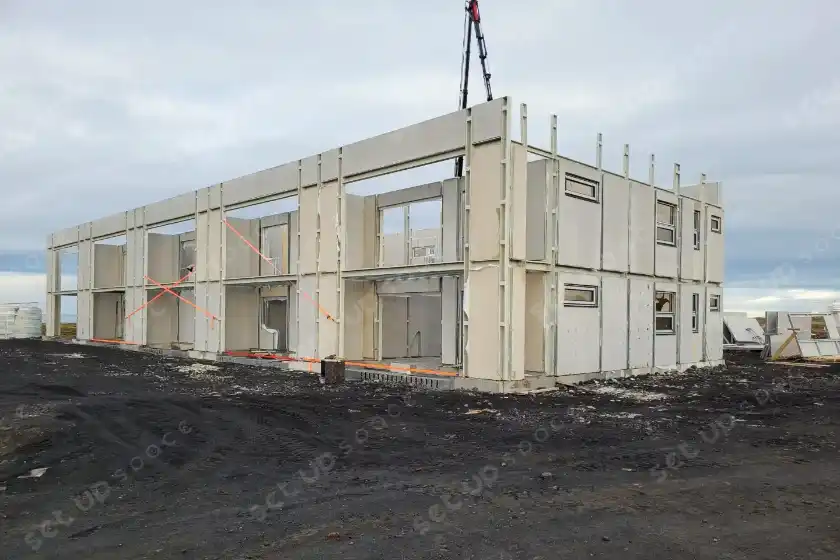
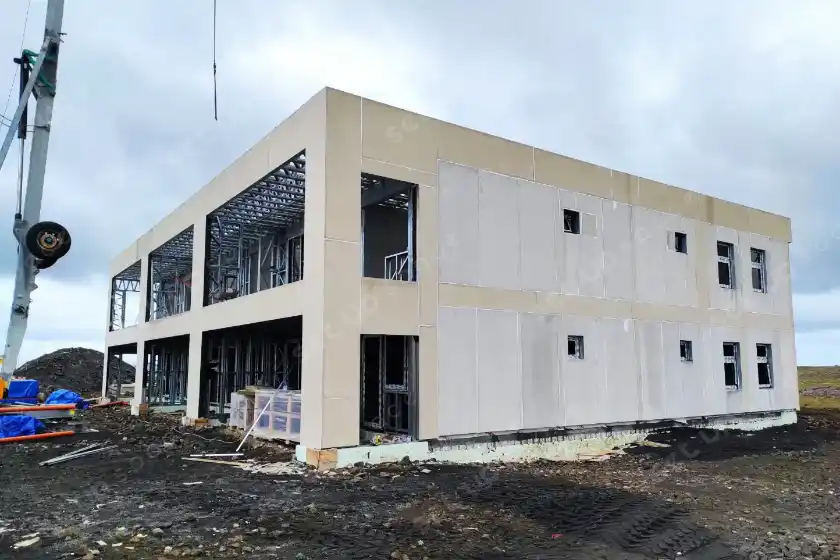
The prefabricated steel structure and pre-manufactured wall panels were erected at an impressive pace. Within 30 days, the complete structural frame, wall systems, floors, and roof were installed, along with thermal, waterproofing, and acoustic insulation works.
This rapid assembly significantly reduced weather-related risks and labor costs, while delivering a fully seismic-resistant structural system in record time.
Interior finishes, mechanical and electrical systems, fixtures, and architectural finishes were completed within 45 days. This phase also benefited from the precision of the cold-formed steel system and prefabricated walls, as pre-planned connection points and exact dimensions minimized on-site modifications that typically slow down conventional construction projects.
From initial concept to the completion of the residential complex, the Grænaborg 6 project not only confirmed the achievements of the previous development but advanced them further—clearly demonstrating the true potential of affordable housing projects when advanced engineering, precision industrial manufacturing, and parallel execution strategies are effectively integrated.
+90 531 256 70 55
info@setupspace.co
Address:
Dilovası OSB, 618. Sk., 41455 – Dilovası/Kocaeli, Türkiye
Commercial Agents:
Libya: Bonyaan Prefabricated Buildings, Tripoli
+218 91 – 00 85 777 / mohamed@bonyaan.com.ly
www.bonyaan.com.ly